How to Avoid Extreme Dandruff in Winters: Expert Hair Care Tips
11 Dec 2025 Posted By Skinlogics
Dandruff, a non-contagious scalp skin condition, manifests as flaking of scalp skin accompanied by mild itchiness. It is a mild type of seborrheic dermatitis, quoted a dermatologist in Noida at Skinlogics Clinic. It usually doesn’t need medical treatment, unless it's extreme and a reason for one’s distress.
Winter often increases the likelihood of dandruff. In this read, learn how extreme winter dandruff can be avoided and addressed with hair expert tips and in-clinic dandruff treatment in Noida.
Causes of Winter Dandruff
Dandruff in winter is the result of:
- Dry, cold air- In winter, there is low humidity and cool weather. The exposure of the head to dry, cold air strips the natural moisture of the scalp and hair, thus causing dandruff.
- Indoor heating system and heated appliances- The use of room heaters, hair straighteners, hair curlers, and hair dryers can all make the scalp and hair dry, thus causing dandruff.
- Hot bath/shower- Having long, hot water showers or baths strips the natural moisture from the scalp skin, thus causing dandruff.
- Dehydration- In winters, the water intake is usually less, and so the lack of inside-out hydration of scalp skin contributes to dandruff.
- Less sun exposure- Sun is the natural, best source for Vitamin D, one of the essential nutrients for scalp health. As in winters, there are fewer sunny days, the body is covered in winter clothing, and so there is limited direct UV exposure, there is a greater risk of dandruff.
- Poor hair care routine- The use of harsh or alcohol-based shampoos and no conditioning further dries the scalp and causes dandruff.
- Stress- The dark winter days can lead to stress and exacerbate dandruff.
- Covering of the head- The protection of the head with a hat or cap, muffler, or scarf can make the scalp sensitive and flaky. This happens because of the trapping of sweat, oil, and dirt, which creates an environment where dandruff-causing fungus, Malassezia, thrives.
Hair Expert-Backed Guide to Keep Scalp Flakes Free in Winters
Now, if you are aware of the potential reasons behind winter dandruff, avoiding them can help prevent and control dandruff in winter. Below are the expert-recommended tips to keep scalp itchiness, flaking, and inflammation under control.
- Use an Appropriate Hair Shampoo.
Take a head wash with an anti-dandruff shampoo containing zinc pyrithione, ketoconazole, salicylic acid, coal tar, and/or selenium sulphide. Leave the medicated shampoo on wet hair for 3-5 minutes before rinsing to ensure utmost control of dandruff. - Adjust the Water Temperature Before Taking a Shower.
Use normal or lukewarm water instead of hot water for hair wash. This way, it is possible to preserve the scalp skin barrier and natural oiliness of the scalp, which is provided by essential lipids. - Gently, Regularly Exfoliate Scalp.
A mild exfoliant like salic-ylic acid can be used on the scalp once or twice a week to keep the scalp clear of skin cell debris and product build-up, thus reducing the extent of dandruff. - Follow a Hydrating Scalp Routine.
Keep the scalp well-nourished and hydrated without plugging pores with heavy oils and greasy serums. Use dermatologically tested, light hair oils and hair-strengthening serums to control scalp irritation and flakiness. - Use Hair Conditioner Only from Mid-Lengths to Ends of Hair.
Applying hair conditioner to the hair roots can cause build-up and extreme flaking. So, keep your scalp clean and balanced by applying hair conditioner as directed. - Wash Hair Less Often.
Make it a habit to have a head wash only 2-3 times a week to avoid stripping of natural oils from the scalp skin. - Keep the Scalp and Hair Protected from a Harsh Environment.
Choose to cover your head with a clean, breathable fabric instead of synthetic caps to protect the scalp from cold, dry winds without trapping sweat and dirt. To protect the head from dryness caused by an indoor heating system, use a humidifier. - Avoid Use of Hair Dryers and Hair Styling Tools/Products.
Exposing the scalp and hair to hot air or heat, and the frequent use of chemical-based, greasy hair cosmetics, can cause or worsen flaking. - Regularly Massage the Scalp.
Scalp massage can boost blood circulation and allow the natural oils to evenly spread across the scalp and hair, and stay nourished and hydrated. - Improve Overall Scalp and Hair Health with the Right Nutrition.
Have hydrating foods, probiotics, foods rich in omega-3 fatty acids, and zinc-rich foods. - Stay Well Hydrated.
Drink adequate water daily to maintain the natural moisture in the skin and hair.
FAQs on Dandruff Treatment in Winter
What should be the hair wash frequency in winter to control dandruff?
Dermatologists generally advise washing hair 2-3 times a week with the recommended anti-dandruff shampoo.
Which shampoo is the best for reducing winter dandruff?
Look for shampoo that is dermatologically tested and contains ketocona-zole, selen-ium sulphide, zinc pyri-thione, sali-cylic acid, and/or coal tar.
Can dry scalp flakes be the same as dandruff?
Yes, sometimes. As per hair experts, usually dry scalp causes white, small flakes, while dandruff usually appears as yellowish, greasy flakes and leaves the scalp itchy. A dermatologist can help confirm whether the flakes are due to dry scalp or fungal activity and provide the required treatment.
Will oiling my scalp and hair help reduce my dandruff in winter?
Yes, if oil is used in moderation and not left for long hours. Mild dryness of scalp in winters should be soothed with only light oils like jojoba and argan oil.
When should I see a dermatologist for winter dandruff?
Schedule a dermatologist visit if experiencing signs of seborrheic dermatitis or fungal infection on the scalp, like intense itching, extreme flaking of scalp skin, greasy scaling, and redness.
Choose Skinlogics Clinic for Professional Treatments for Extreme Winter Dandruff
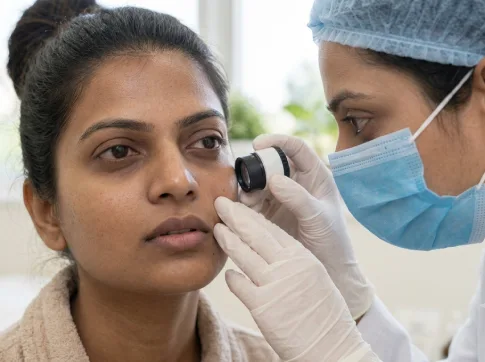
Struggling to get rid of dandruff in winter? Meet the best hair loss expert and dandruff treatment doctor in Noida at Skinlogics Clinic for a customized, professional dandruff control plan. The doctor may recommend the best prescription-strength shampoos, medicated lotions, scalp exfoliation, or targeted therapies that help restore the scalp balance and ensure long-term dandruff relief. Schedule a consultation today.