Doctor-Approved Ways to Get Rid of Hyperpigmentation Safely & Effectively
- Written by: Skinlogics Clinic Team
- Published: 16 Mar 2026
- Medically Reviewed by: Dr. Vandana Malik
- Last Reviewed: 16 Mar 2026
Hyperpigmentation is a skin concern many people struggle with. It may start with a tiny discoloration and turn into stubborn dark patches over time, ruining your visual appeal and confidence.
But here is the good news- hyperpigmentation is treatable. Whether you have post-acne/injury marks, sun spots, melasma, or irregular pigmentation, you should not settle for over-the-counter and do-it-yourself hyperpigmentation remedies when you have expert-backed cosmetic dermatological procedures at your disposal. Skin doctors at Skinlogics Clinic always recommend safe and effective treatment for your pigmentation concerns, including their recommended pigmentation removal treatment in Noida, along with proper care.
In this blog, we will walk you through the doctor-approved ways to get rid of hyperpigmentation. To decide what’s best for you, you will have to learn about hyperpigmentation and its causes and types first.
What is Hyperpigmentation?
Hyperpigmentation, one type of pigmentation concern, is the darkening of skin in spots or patches. It happens when the skin’s melanocytes produce more melanin, a colored pigment that normally imparts the natural color of the skin.
Hormonal, genetic, or environmental factors could trigger the melanin excess. Thus, there are various forms of hyperpigmentation. The common types and their causes are as follows:
- Melasma- It’s the brown or grey-brown spots on sun-exposed areas, often common in pregnancy or when there is hormonal disturbance of estrogen and progesterone, with some medication, therapy, or illness.
- Sun spots- It’s the flat, brown to black spots on the sun-exposed skin resulting from prolonged UV exposure.
- Freckles- They are the small, benign, tan to brown spots on the sun-exposed areas, genetically influenced in fair-skinned people, and are more prominent on skin with heavy UV exposure.
- Post-Inflammatory Hyperpigmentation- It’s the dark spots that develop on areas that had acne, injury, or burns.
- In most cases, melanin is produced in excess to protect the skin from harm caused by prolonged or repeated UV exposure.
Dermatologist-Recommended Ways to Treat Hyperpigmentation: Approaches that Actually Work
- Daily Sunscreen Application
Never skip using a water-resistant, broad-spectrum sunscreen with SPF 30 or higher in your morning skincare ritual. When outdoors for long periods, apply sunscreen every 2-3 hours and seek shade, covering sun-exposed areas. Choose a sunscreen that is suitable for your skin type, has physical blockers: zinc oxide or titanium dioxide, and UVA protection- PA+++ or PA++++ rating.
Sun protection is mandatory to help prevent new dark spots or patches, or worsening of existing hyperpigmentation. Moreover, it supports the best hyperpigmentation treatments.
- Consistent Use of Prescription Topicals
Dermatologists always recommend using products with science-backed ingredients. Here are the ingredients to look for:
- Hydroquinone- This gold-standard ingredient is often recommended for use under medical supervision at a 2 to 4% concentration for 8-12 weeks. It helps lower melanin production by inhibiting the tyrosinase enzyme responsible for it.
- Retino-ids like Tret-inoin- This Vitamin A derivative holds clinical backing of encouraging skin cell turnover and providing quick shedding of pigmented cells, in patients with melasma and post-inflammatory hyperpigmentation. It even helps boost collagen remodelling, which resurfaces the skin. It must be incorporated gradually into skincare to avoid extreme skin irritation.
- Vitamin C (L-Ascorbic Acid)- This potent antioxidant in a 10-20% concentration can help lighten and brighten the complexion. It protects the skin against oxidative stress/ free radicals and UV damage and helps reduce melanin production.
- Azelaic Acid- This chemical, in a 15 to 20% concentration, is best suited to lessen inflammation and melanin production in individuals with acne-prone skin having dark spots/patches. It's best for melasma management.
- Kojic Acid and Niacinamide- These are natural chemical agents that work synergistically to brighten the skin. Kojic acid works by inhibiting the tyrosinase enzyme, while Niacinamide works by blocking the transfer of melanin pigments.
- Sessions of Controlled Chemical Exfoliation
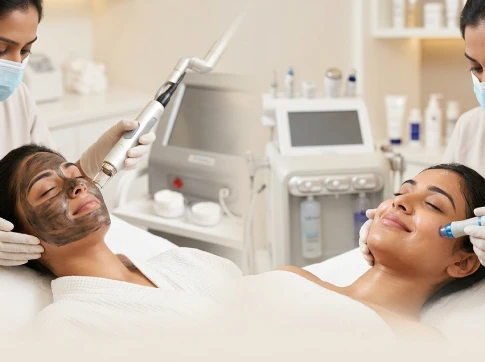
When topicals are not helping one get rid of hyperpigmentation, dermatologists suggest an in-clinic chemical peel treatment, based on the depth of melanin deposition. Mostly recommended peels are superficial (glycolic acid), medium (salicylic acid), and deep (trichloroacetic acid or phenol). These work to peel off all the pigmented layers, revealing an evenly pigmented, fresh layer of skin underneath. Multiple sessions are required for mild-to-medium peels.
- Laser and Light-Based Treatments
For moderate to deep-seated hyperpigmentation, laser treatment in Noida with intense pulsed light (IPL), a fractional laser, or a Q-switched Nd: YAG laser can be safe and effective. The treatment must be performed with a suitable laser, multiple times, in a clinic setting, by a trained and experienced professional, to ensure no damage to surrounding tissues and to prevent rebound pigmentation.
- Microneedling with P-RP Sessions
Microneedling involves the use of a specialised device with multiple sterile micro needles over the pigmented skin. It creates controlled micro-injuries and stimulates the natural wound healing response- the fresh collagen production, which helps even out the skin tone and texture. When this technique is paired with P-RP therapy, the infusion of plat-elet-rich plas-ma into deeper layers of the skin effectively fades pigmentation, especially post-acne marks. For peak enhancements in natural skin tone, combination therapy sessions are recommended every 4-6 weeks.
- Oral Therapies (in Selected/Resistant Cases)
For melasma patients without blood-clotting disorders, dermatologists may prescribe low-dose tranexamic acid tablets. These work by reducing the UV and hormone-induced activity of melanocytes.
Support Hyperpigmentation Treatment in Noida with Some Lifestyle Modifications
The underlying cause of the hyperpigmentation must be addressed. If it’s prolonged or excessive UV exposure, be diligent about avoiding outdoor activities during peak sun hours, seeking shade, and wearing sunscreen and sun-protective clothing. For hormonal pigmentation, ensure healthy stress management and other triggers for hormonal disturbance. In any case, a gentle skincare routine is also equally important.
The Key Takeaways
Hyperpigmentation can happen to anyone, and it's manageable with the right treatment.
The cause and extent of concern, along with the patient's skin type and budget, determine the best science-backed approach to treating hyperpigmentation.
With a dermatologist-approved hyperpigmentation treatment, patience, consistent UV protection, and professional skincare guidance, a uniform complexion is achievable.
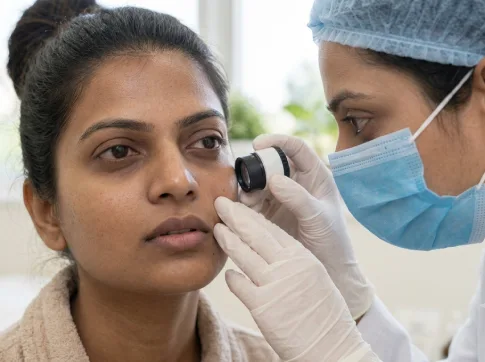
So, if you're seeking an affordable, precision pigmentation removal treatment in Noida for your dark spots/patches, have an honest consultation with skin experts at Skinlogics clinic.
The experts provide thorough skin analysis and evidence-backed, safe, and effective dermatological procedures in combination with the right skincare. Our goal is to help patients achieve long-term, balanced, healthier, even-toned, and textured skin.
FAQs on Skin Pigmentation Treatment
What not to do with pigmented skin?
Avoid going for unsupervised or non-prescribed treatments, as that’s unsafe. Always consult a dermatologist before trying any topical or therapy to avoid rebound hyperpigmentation.
Can hyperpigmentation naturally fade?
Mild cases may require just non-negotiable UV protection and use of actives.
Is hyperpigmentation permanent?
Hyperpigmentation concerns don’t last a lifetime when properly treated by a dermatologist. Without maintenance, the concern might recur.
How long does it take to get rid of hyperpigmentation with a dermatologist-recommended approach?
Patience is important even with dermatologist-recommended hyperpigmentation treatment. The time for the concern to resolve depends on the type and extent of pigmentation and the chosen approach. Generally, it takes a few weeks to even months.
Can hyperpigmentation be treated during pregnancy?
Use of azelaic acid-based products and UV protection is only advised to manage hyperpigmentation during pregnancy. For checking on the safety of other approaches, always consult a dermatologist.